
The Nitto ATP Finals 2021 tennis tournament took place in Turin from 14 to 21 November 2021 at the Pala Alpitour.

The organizers, following the health restrictions linked to the Covid-19 pandemic, were obligated to limit the capacity to 60% of the site (7,200 spectators instead of 12,000).
The Citec Italia team, during one of the days of the event (November 18, 2022) carried out a survey on venue mobility and transportation. The goal was to monitor the distribution of the flows of spectators and accredited stakeholders in proximity with the venue, especially during the hours preceding the late afternoon / evening matches.
Main points regarding the observer program were the following:
- Road closures and traffic perimeter
- Counts of spectators get on and off at the tram stops #4 and #10
- Counts of cars parked on street in the neighbouring roads
- Connections and info-mobility with the city centre
The results were summarized in a map and shared with the organizers. The aim is to help improve the mobility and transport plan of this important sporting event for the city of Turin which will be developed over a 5-year time horizon (2021 to 2025).

On the same topic
-

Brisbane 2032: Citec trains public transport professionals for large events
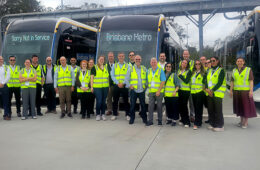
20 October 2026Read moreFrom 13 to 15 October, the UITP Academy brought together operators and transport authorities in Brisbane for a training programme on public transport during major events. Citec took part as a trainer, with Stefano Manelli, Director of Citec Italy.
-
Transportation Technical Assistance for Special Olympics
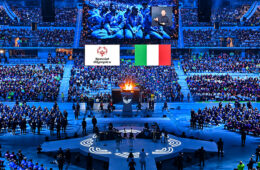
8 October 2026Read moreCitec collaborated with Special Olympics (SOI) on the development of transportation planning resources and operational guidance for future Special Olympics events.
-
Milan Cortina 2026: Stefano Manelli’s vision after the Olympic Games
3 September 2026Read moreHead of Transport for Milano Cortina 2026 and Director of Citec Italy, Stefano Manelli looks back on the preparation of mobility for the 2026 Winter Olympic and Paralympic Games. Between infrastructural and operational challenges, transport planning is the invisible engine behind the success of a global event, while also being a central element of its territorial legacy.